Decide what guests need from a wedding welcome sign before choosing its material. It may confirm they have reached the right celebration, point them towards the ceremony or explain an arrival instruction. One clear job is more useful than a board carrying every detail of the day.
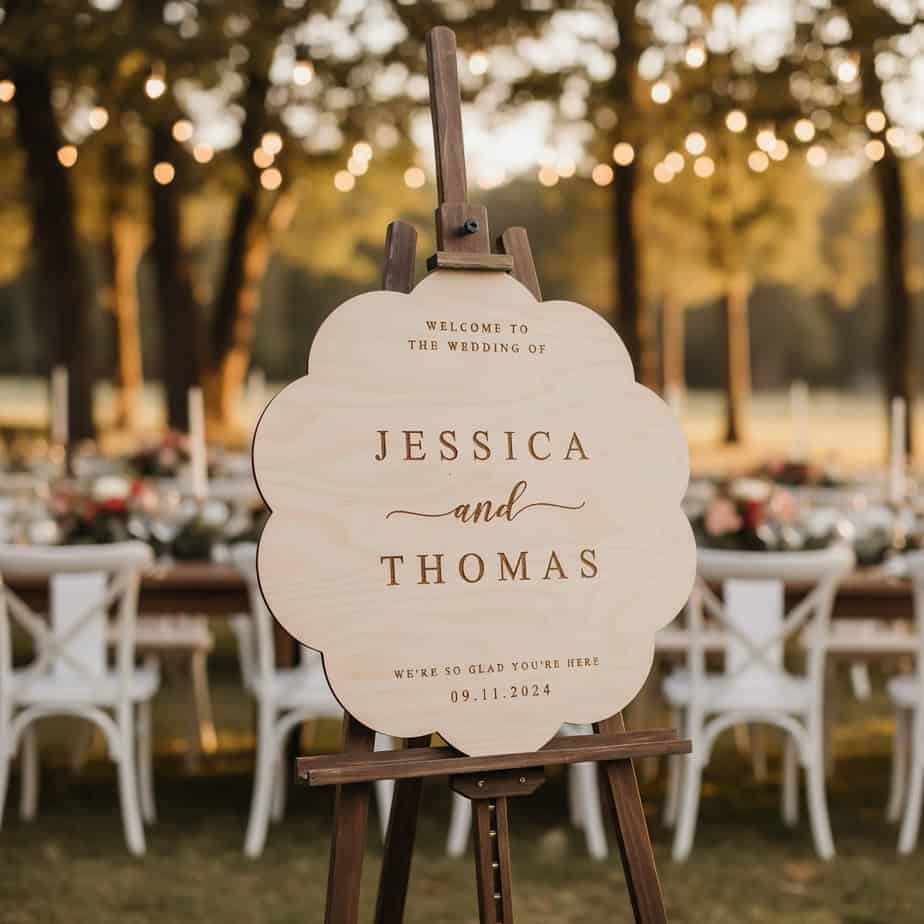
Keep the wording short enough to read while arriving
A simple layout might read: Welcome to the wedding of [names], [date]. Ceremony through the courtyard. Adapt the wording to your venue and arrival plan. Keep the names and any direction prominent; a long quotation is less useful when someone is trying to find the right entrance.
Only put a direction on the sign after the venue confirms the route. If guests arrive through more than one entrance, decide whether a welcome board is enough or if separate wayfinding would help. Avoid printing an instruction that depends on an unconfirmed weather plan.
Test the lettering at full size
Print a paper section or mock up the main wording at the intended size. Stand where a guest would first see it and check the contrast. Ask someone who has not been choosing the fonts to read it. A design that looks clear close to a screen can be difficult to read beside a busy doorway.
Think about the display surface and light together. Reflections, texture and a crowded background can affect readability. Ask the maker about the actual finish rather than assuming a material name tells you how the lettering will look in your setting.
The RNIB accessible-campaign guide recommends clear print and good colour contrast for campaign materials. Those are useful starting principles, not a wedding-sign specification. Check your actual viewing distance, light and lettering rather than treating a screen mock-up as the final test.
Compare actual materials, not the category introduction
For a timber example, Australian retailer T.Ess Personalised offers wooden wedding welcome sign designs. Compare the chosen product’s material, lettering, size and display instructions. Broad category descriptions do not establish that every material mentioned is currently available to order.
UK delivery has not been confirmed, and the site’s FAQ and newer shipping policy differ on international availability. Couples ordering in Australia before travelling should still confirm the item, production time and delivery arrangements before buying.
Give the stand as much thought as the board
Ask the venue where the display can go, what must remain clear and who will set it out. Confirm whether the stand is included, hired separately or supplied by the venue. Do not assume a photographed easel comes with the product.
For an outdoor display, agree what happens if conditions change. Ask the venue and supplier about suitability rather than treating a sign as weatherproof because of its appearance. Keep any securing arrangement away from the guest route and follow the venue’s instructions.
Plan how it gets there and how it leaves
Before ordering a large sign for an overseas wedding, check packed dimensions, transport arrangements and storage at your accommodation. Compare that effort with making or hiring something locally. A compact keepsake and a full-size entrance board create quite different luggage problems.
Put the sign into the supplier handover plan: who receives it, who checks the wording, who puts it out and who collects it afterwards. The venue questions help settle its position; the details notebook keeps the rest of the styling practical.
Continue in the wedding ideas notebook.